


| Cat No | Product | Size | Price |
|---|---|---|---|
| PB20.71-01 | Clara® Inhibitor-Tolerant Probe Mix Lo-ROX | 200 x 20 μL Reactions | Contact us |
| PB20.71-03 | Clara® Inhibitor-Tolerant Probe Mix Lo-ROX | 600 x 20 μL Reactions | Contact us |
| PB20.71-05 | Clara® Inhibitor-Tolerant Probe Mix Lo-ROX | 1000 x 20 μL Reactions (5 x 1 mL) | Contact us |
| PB20.71-50 | Clara® Inhibitor-Tolerant Probe Mix Lo-ROX | 10 000 x 20 μL Reactions (1 x 50 mL) | Contact us |
| PB20.72-01 | Clara® Inhibitor-Tolerant Probe Mix Hi-ROX | 200 x 20 μL Reactions | Contact us |
| PB20.72-03 | Clara® Inhibitor-Tolerant Probe Mix Hi-ROX | 600 x 20 μL Reactions | Contact us |
| PB20.72–05 | Clara® Inhibitor-Tolerant Probe Mix Hi-ROX | 1000 x 20 μL Reactions (5 x 1 mL) | Contact us |
| PB20.72-50 | Clara® Inhibitor-Tolerant Probe Mix Hi-ROX | 10 000 x 20 μL Reactions (1 x 50 mL) | Contact us |
| PB20.73-01 | Clara® Inhibitor-Tolerant Probe Mix No-ROX | 200 x 20 μL Reactions | Contact us |
| PB20.73-03 | Clara® Inhibitor-Tolerant Probe Mix No-ROX | 600 x 20 μL Reactions | Contact us |
| PB20.73-05 | Clara® Inhibitor-Tolerant Probe Mix No-ROX | 1000 x 20 μL Reactions (5 x 1 mL) | Contact us |
| PB20.73-50 | Clara® Inhibitor-Tolerant Probe Mix No-ROX | 10 000 x 20 μL Reactions (1 x 50 mL) | Contact us |
| PB20.74-01 | Clara® Inhibitor-Tolerant Probe Mix Separate-ROX | 200 x 20 μL Reactions | Contact us |
| PB20.74-03 | Clara® Inhibitor-Tolerant Probe Mix Separate-ROX | 600 x 20 μL Reactions | Contact us |
| PB20.74-05 | Clara® Inhibitor-Tolerant Probe Mix Separate-ROX | 1000 x 20 μL Reactions (5 x 1 mL) | Contact us |
To view your price, please log in or register with your quote code.
Specifications
Clara® Inhibitor-Tolerant Probe Mix Lo-ROX
| Components | 200 reactions | 600 reactions | 1000 reactions | 10 000 reactions |
|---|---|---|---|---|
| 4x Clara Inhibitor-Tolerant Probe Mix Lo-ROX | 1 x 1 mL | 3 x 1 mL | 5 x 1 mL | 1 x 50 mL |
Clara® Inhibitor-Tolerant Probe Mix Hi-ROX
| Components | 200 reactions | 600 reactions | 1000 reactions | 10 000 reactions |
|---|---|---|---|---|
| 4x Clara Inhibitor-Tolerant Probe Mix Hi-ROX | 1 x 1 mL | 3 x 1 mL | 5 x 1 mL | 1 x 50 mL |
Clara® Inhibitor-Tolerant Probe Mix No-ROX
| Components | 200 reactions | 600 reactions | 1000 reactions | 10 000 reactions |
|---|---|---|---|---|
| 4x Clara Inhibitor-Tolerant Probe Mix No-ROX | 1 x 1 mL | 3 x 1 mL | 5 x 1 mL | 1 x 50 mL |
Clara® Inhibitor-Tolerant Probe Mix Separate-ROX
| Components | 200 reactions | 600 reactions | 1000 reactions | |
|---|---|---|---|---|
| 4x Clara Inhibitor-Tolerant Probe Mix No-ROX | 1 x 1 mL | 3 x 1 mL | 5 x 1 mL | |
| 50 μΜ ROX Additive | 1 x 200 μL | 1 x 200 μL | 1 x 200 μL |
Reaction Info
| Reaction volume | Storage | |||
|---|---|---|---|---|
| 20 μL | Upon arrival, the product should be stored at -30 to -20 °C. When stored correctly, the kit will retain full activity until the expiry date listed. |
Instrument Compatibility
This product is compatible with all standard and fast qPCR instruments. Use our qPCR selection tool to identify which ROX variant is compatible with your instrument.
Frequently Asked Questions
Can I perform fast PCR cycling with this mix?
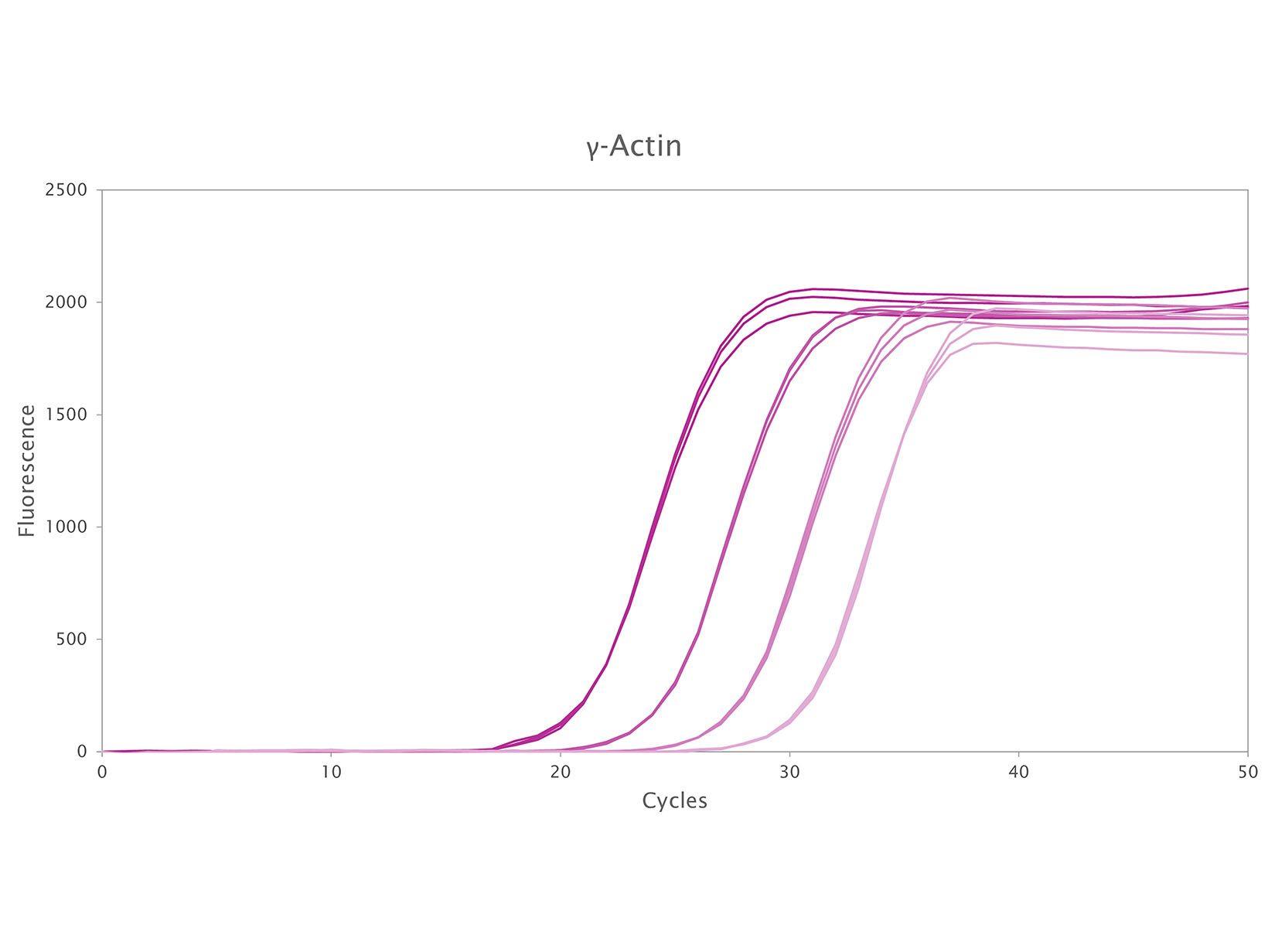
Reliable amplification of various targets has been successfully achieved with 40 cycles, with 1 second for denaturation and 3 seconds for annealing and elongation (2-step cycling). Successful amplification under these conditions requires the amplification products to be short and should be tested on a case-by-case basis for all new targets added to an experiment.
Can I use crude plant extracts with this mix?
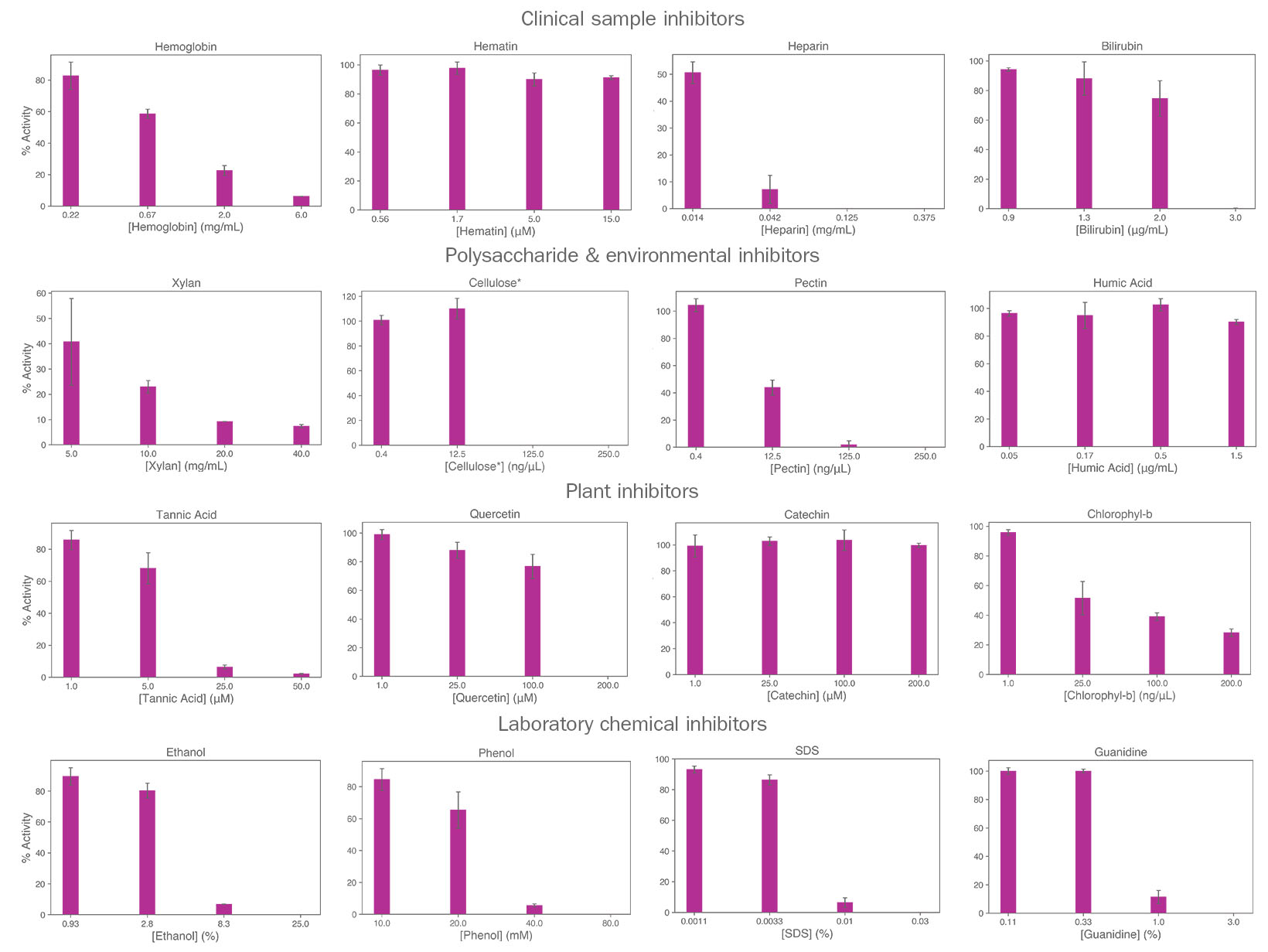
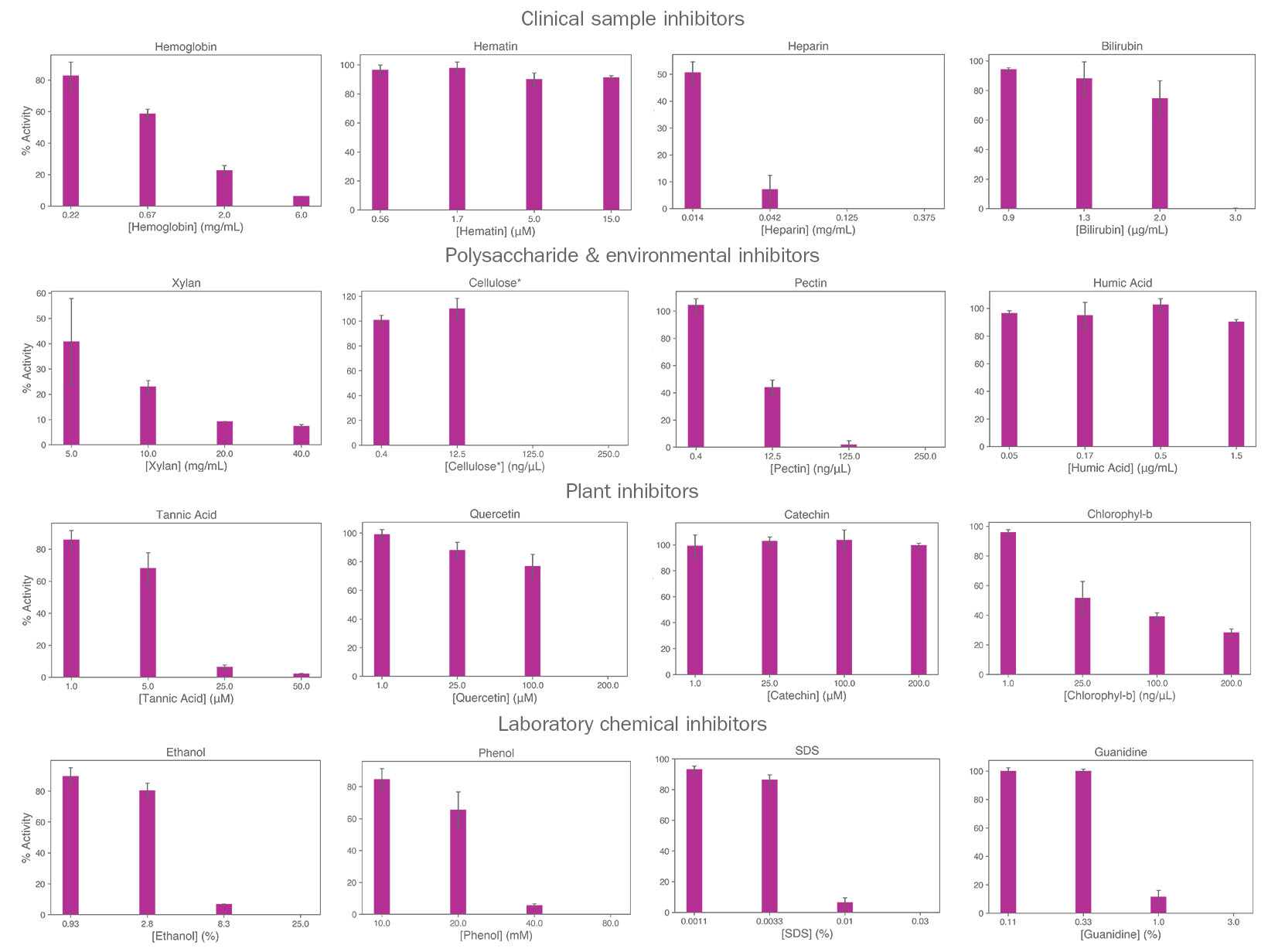
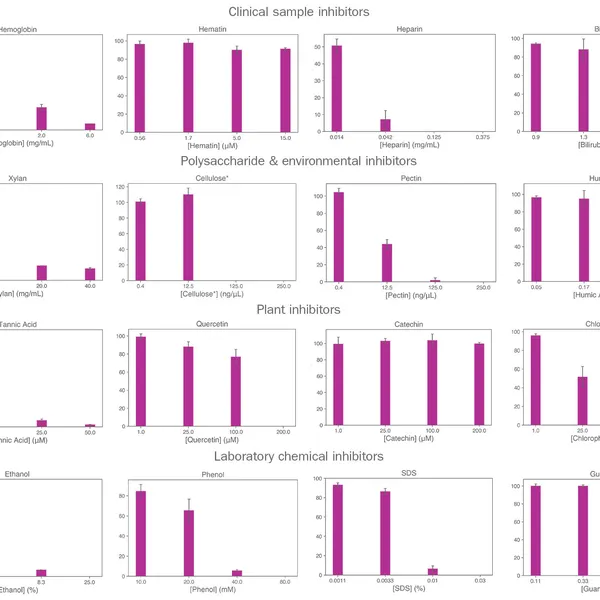
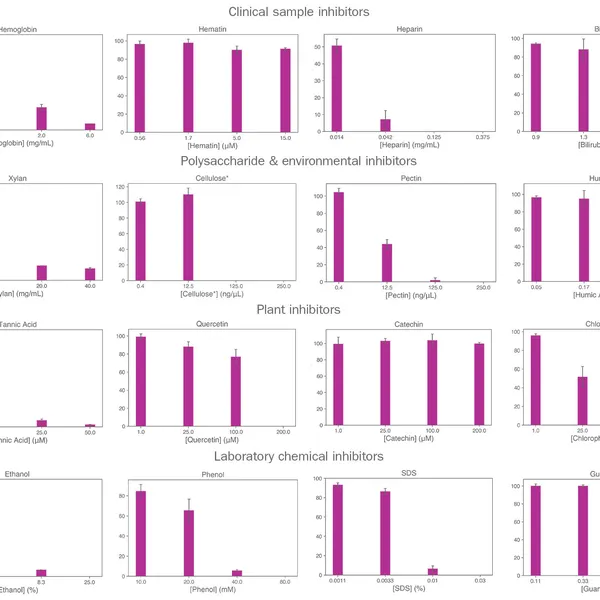
Results will vary depending on the plant species and type of tissue. Our inhibitor-resistant chemistry shows moderate resistance to chlorophyll and polyphenols such as catechin and quercetin, but weak resistance to tannic acid, cellulose, and pectin. It is therefore recommended to test the mix on the desired sample types. All plant tissues will require mechanical decomposition in an appropriate extraction buffer to achieve cell and membrane rupture, prior to using with inhibitor-tolerant mixes. We recommend trialing a small number of reactions across the target sample type. Please contact our team via info@pcrbio.com to request a product sample, or if you require assistance in planning test reactions.
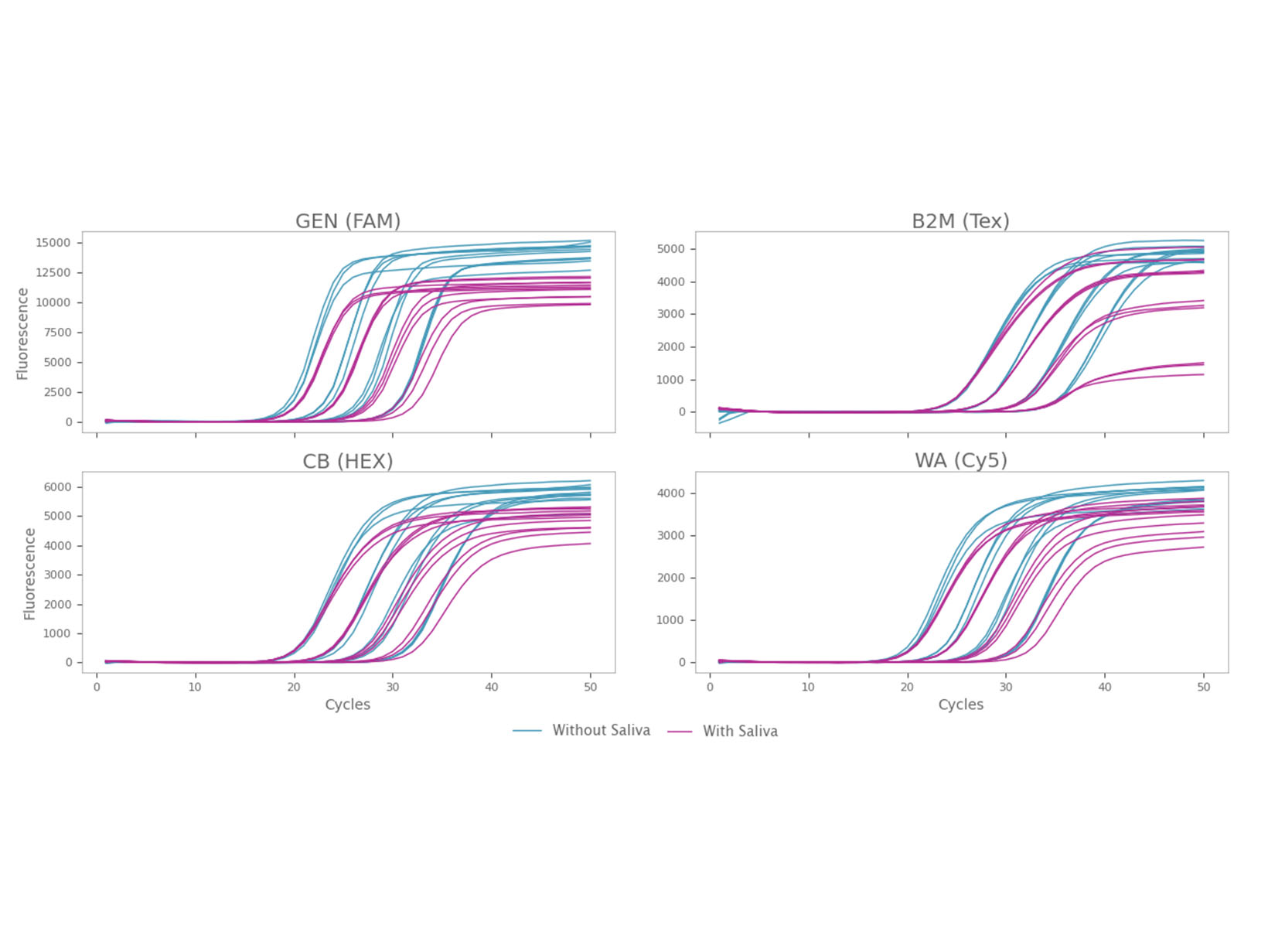
Do I need to pre-treat saliva samples before using with this mix?
Saliva samples do not require pre-treatment. However, we advise diluting in an appropriate sample transport media. We strongly recommend using UTM without guanidinium chloride.
How much crude blood can I add per reaction?
We have successfully performed multiplex reactions on up to 5 μL of blood sample (1.25 μL of crude blood diluted 1:4 in NaCl/EDTA solution) per 20 μL reaction. This results in a reduction in overall fluorescence but does not inhibit the qPCR reactions, nor limit the sensitivity of the mix.
How much crude saliva can I add per reaction?
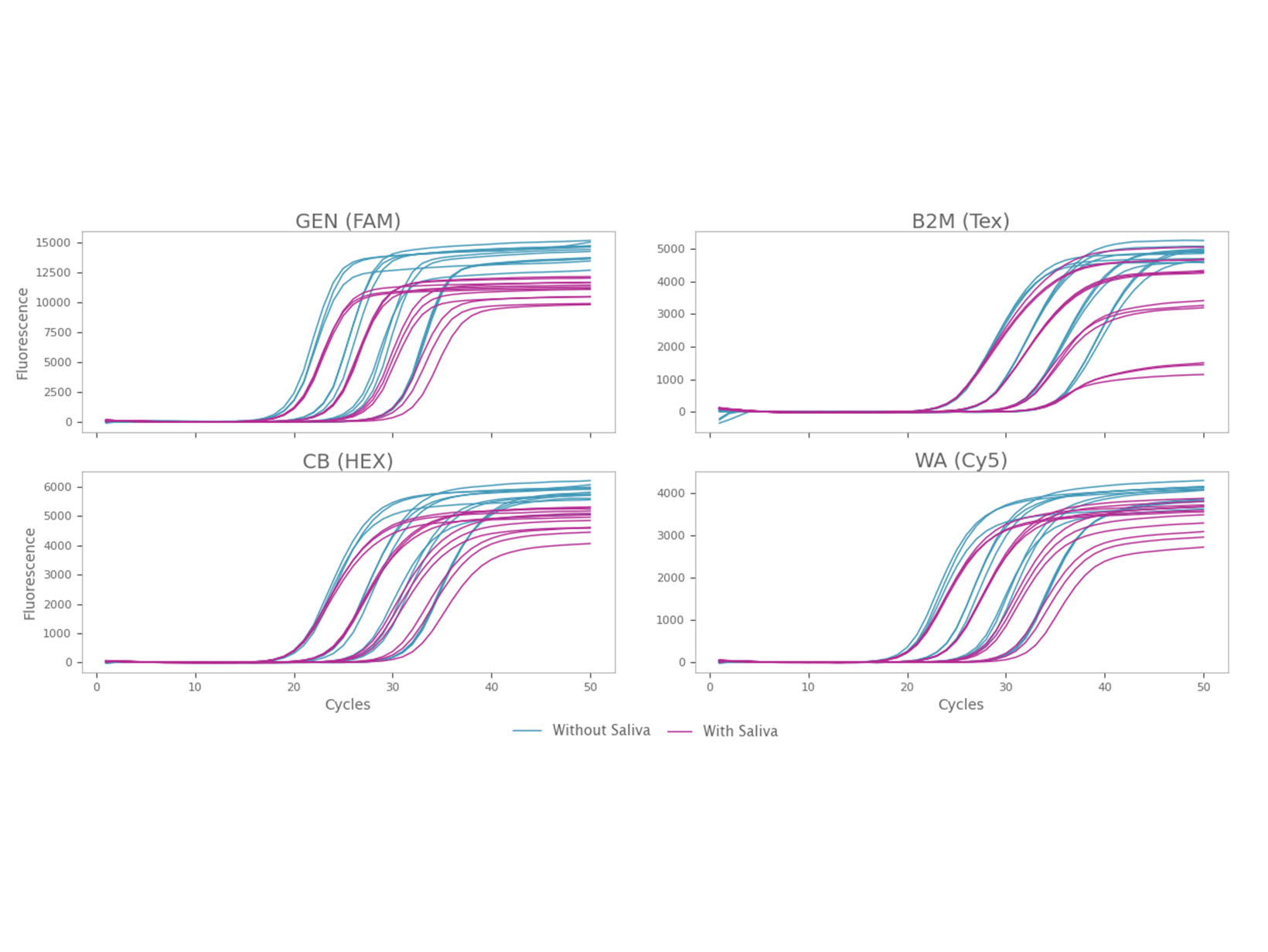
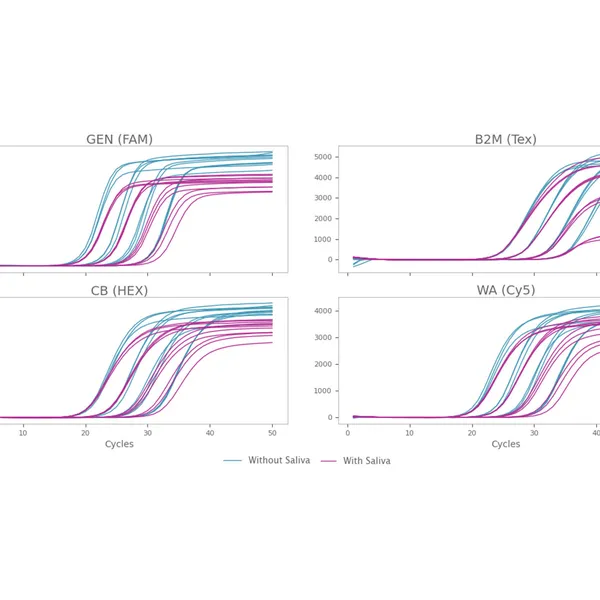
We have tested successfully with up to 10% crude saliva per reaction, with the best and most consistent results observed with 2.5% saliva
Is it normal to see a delay in Cq in the presence of crude samples?
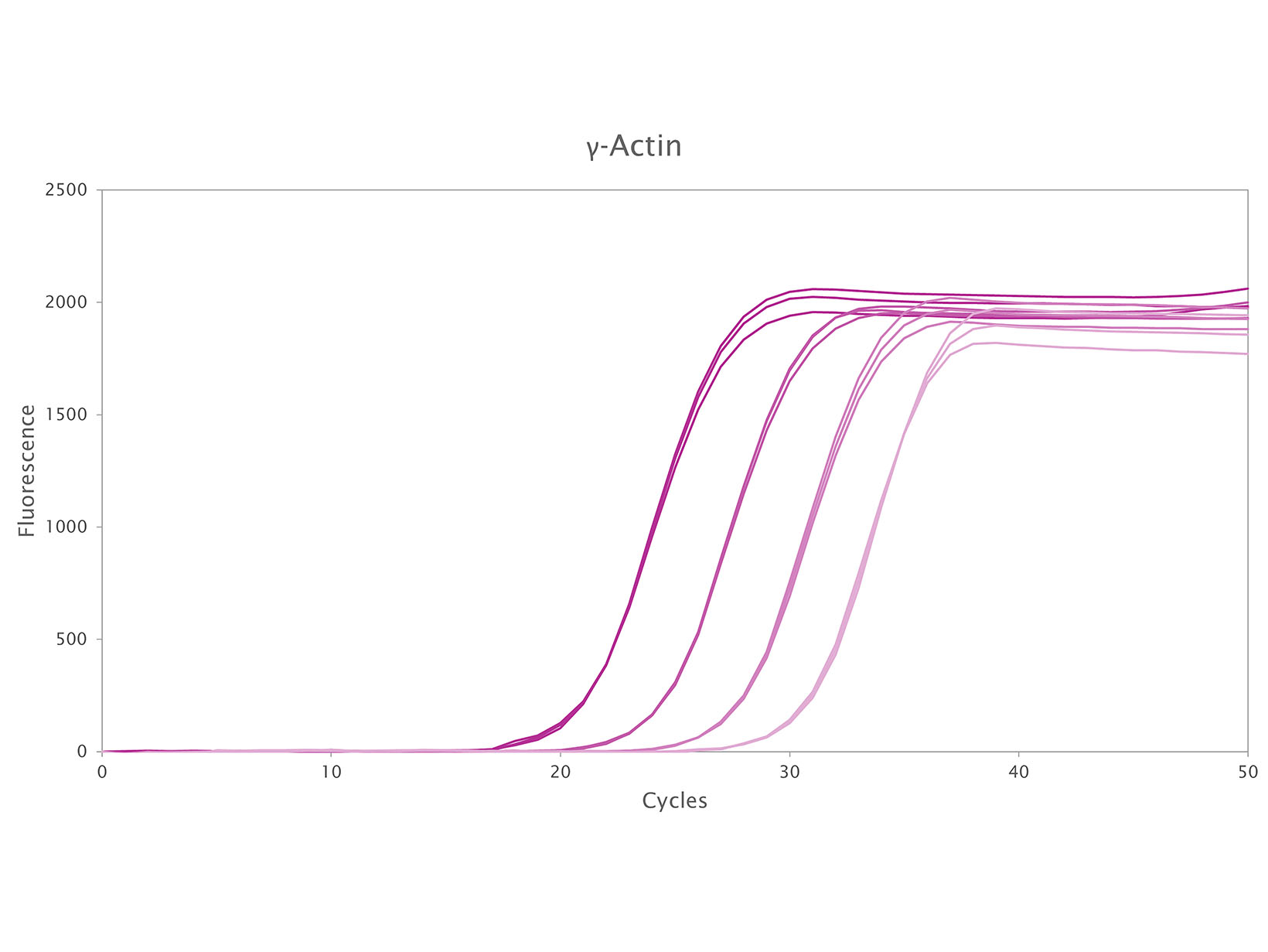
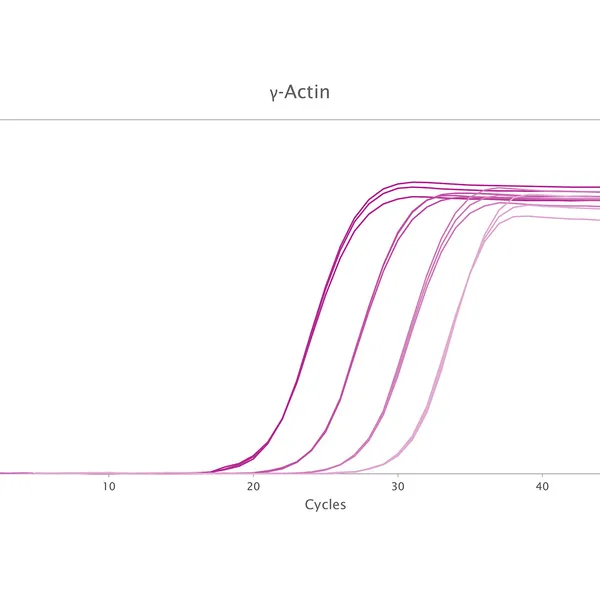
Yes. Although the mix is inhibitor-tolerant, it is not entirely resistant to the presence of inhibitors. Different inhibitors and higher concentrations may still inhibit qPCR reactions. Given the sensitivity of the mix, if a significant delay is observed, we recommend diluting the sample prior to using in qPCR reactions.
Is it normal to see varying levels of inhibition with different crude samples?
Yes, this is expected. Crude biological samples, especially saliva, contain varying levels of PCR inhibitors. We have observed a range of 0.5-3.5 cycle delay in amplification of the same target with different saliva samples. The same crude biological sample may also show varying levels of inhibition over time.
What inhibitors can this mix tolerate?
All our inhibitor-tolerant mixes have been tested and tolerate crude blood and crude saliva. Additionally, they have been extensively tested in the presence of numerous PCR inhibitors present in clinical, plant, environmental, and laboratory chemicals. These include: hemin, hemoglobin, heparin, lactoferrin, IgG immunoglobulins, guanidine, SDS, ethanol, urea, sodium citrate, humic acid, cellulose, pectin, quercetin, catechin, tannic acid, and chlorophyll B. Tolerance levels vary depending on the compound. The mixes can also tolerate other compounds not listed or untested.
Read more